
Disc problems
A bulging or herniated disc can press on a nearby nerve root, producing pain, numbness or weakness that travels away from the spine. Assessment establishes which level is involved and whether conservative care is appropriate, with imaging on site where clinically indicated.
Understanding the problem
A disc problem is not automatically a surgical problem
Discs sit between the vertebrae and act as spacers and shock absorbers. When the outer wall weakens, the inner material can push outward — a bulge — and in some cases through it, a herniation. The symptom depends on whether that displaced material contacts a nerve root, and which one.
The important point is that a disc finding on imaging does not by itself determine treatment. Many people have disc changes visible on imaging and no symptoms at all. What matters is whether the clinical picture matches the imaging, which is why examination comes first and imaging second.
What a first visit involves
How we work through it
We do not begin treatment on first meeting you. The assessment comes first.
- History — we listen firstWhere the pain is, when it started, what makes it worse, previous injuries, and your work and sleep posture. For accident or work injury cases, how the incident happened.
- Physical examinationPalpation, range of motion testing, and a neurological check of reflexes, strength and sensation — to work out whether the problem is structural, neurological or soft tissue.
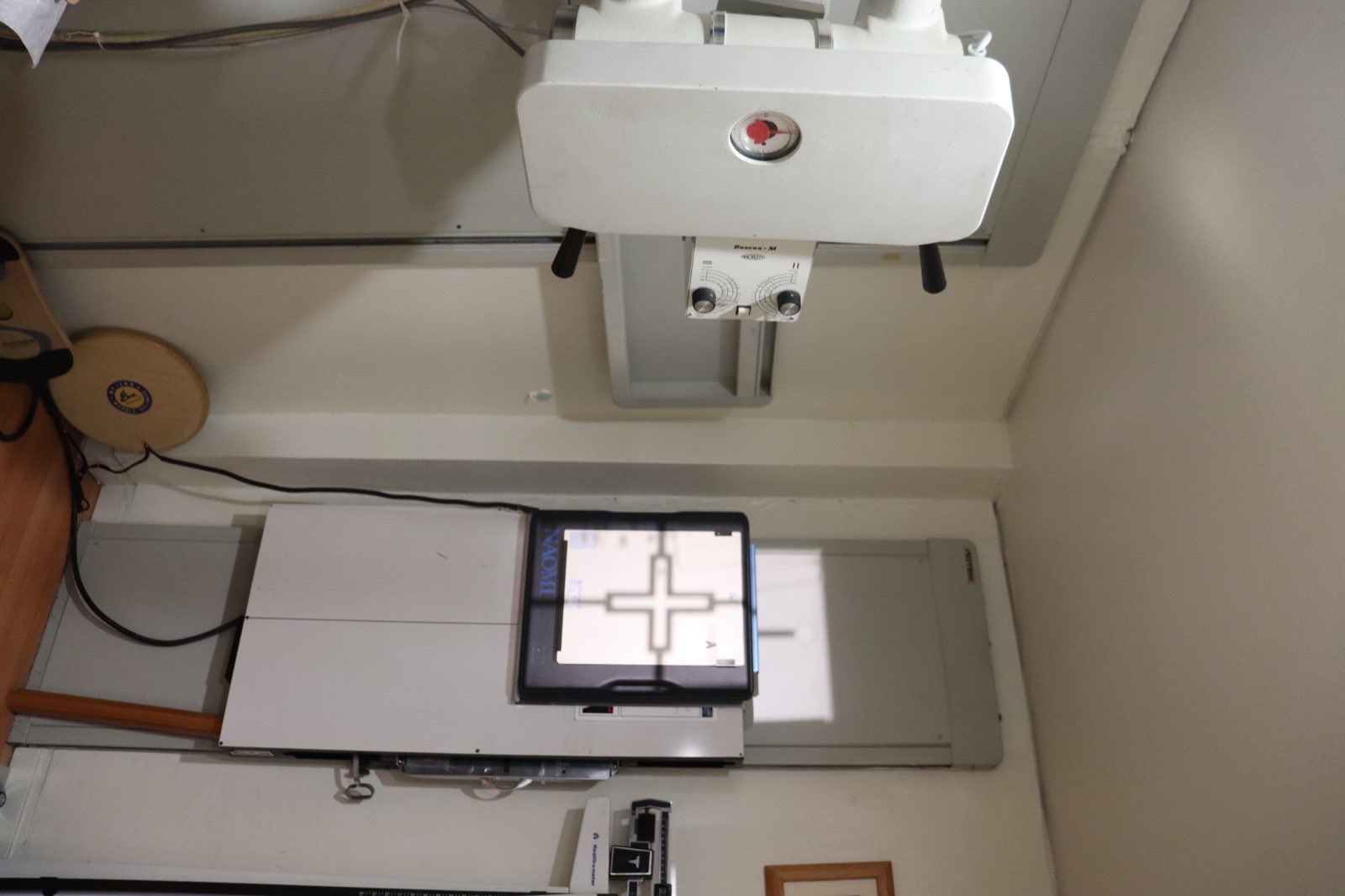
- Digital X-ray if indicatedTaken on site. Whether it is needed is a clinical judgement, not a default for every patient.
- Findings and plan explainedIn the same visit you are told what was found, the likely cause, what is proposed and roughly how many visits it may take — before anything begins.
At the clinic
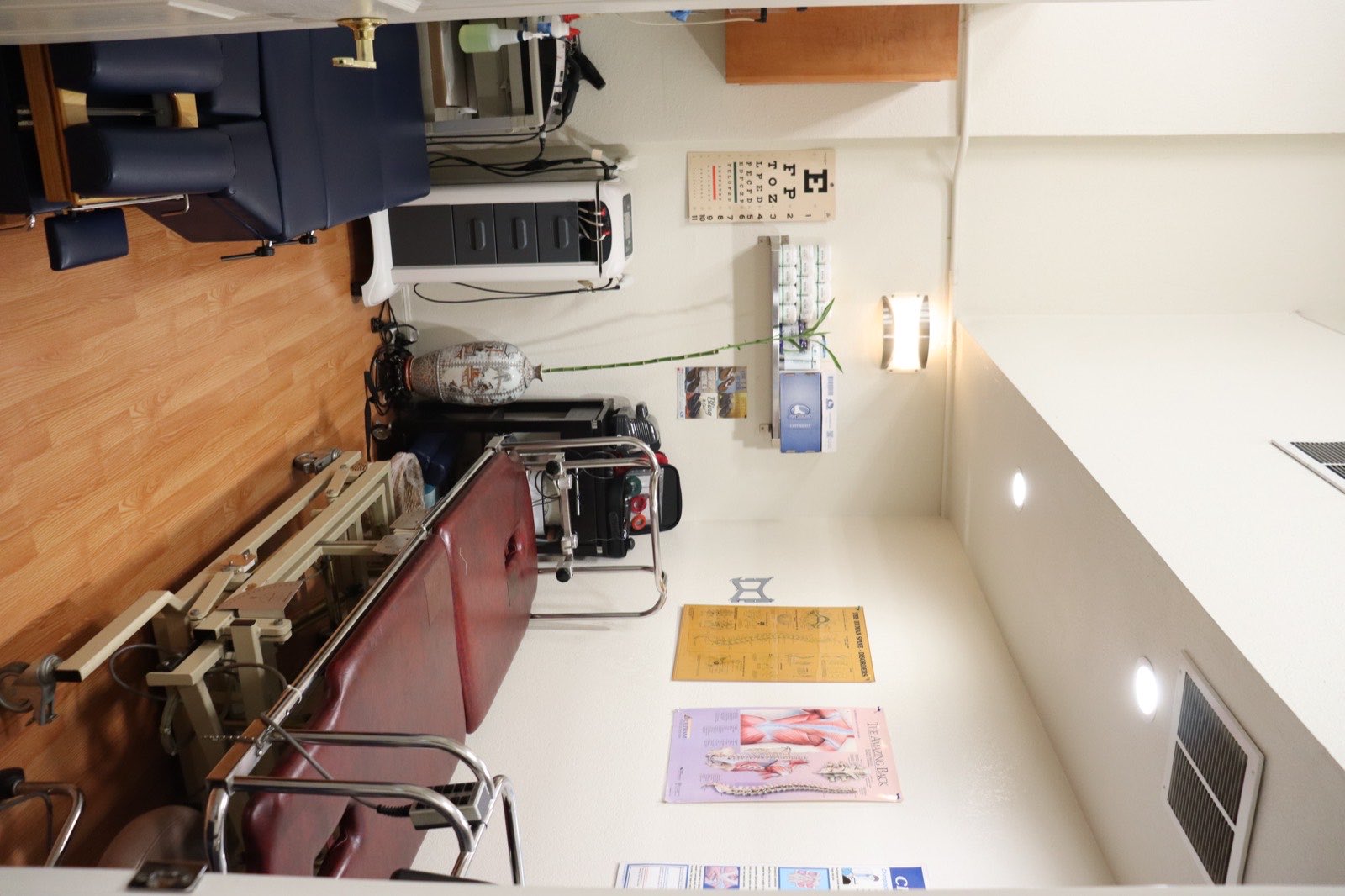
Treatment rooms and equipment
What may be used
Combined according to the assessment
Not every patient needs every item. What is used follows from what the examination shows.
- Digital X-ray where clinically indicated
- Spinal traction to reduce pressure on the affected segment
- Chiropractic adjustment of adjacent restricted segments
- Electrical stimulation for associated spasm
- Ultrasound therapy
- Cold therapy in the acute phase
- Graded rehabilitation exercise
- Advice on lifting, sitting and sleeping position
Fees and insurance
Who usually pays for this
How treatment is funded changes what paperwork you need. Pick the closest to your situation:
Auto accident
The at-fault driver's liability cover, MedPay on your own policy, or on a lien where you are represented.
What you need →Work injury
California workers' compensation — approved treatment is paid by the employer's insurer.
How it works →Private insurance
What PPO plans typically cover, and deductibles.
How to check →Self-pay
Self-pay rates, including initial examination with digital X-ray.
See rates →Why here
A few objective points
1988 — 38 years
Same practitioner, same Oakland Chinatown block since 1988.
Cantonese · Mandarin · Taiwanese · English
From history-taking to explaining the plan, in the language you are most comfortable in.
Digital X-ray, same visit
Where imaging is clinically indicated it is taken here, not at a separate centre.
5 min from Lake Merritt BART
Madison professional building, downtown Oakland. Building and street parking.

FAQ
Frequently asked questions
Do I need an MRI?
Not always. X-ray shows alignment and bone; MRI shows soft tissue including the disc itself. Where the examination suggests MRI would change management, we say so and refer. Imaging for its own sake rarely helps.
Will I need surgery?
Most disc problems settle with conservative care. Surgery is generally considered where there is progressive neurological loss, or where conservative care has been given a fair trial without improvement. Where the examination suggests a surgical opinion is needed, we refer.
Is adjustment safe with a disc problem?
It depends on the presentation, which is exactly why the examination comes first. There are disc presentations where manipulation of the affected segment is not appropriate, and the approach is adjusted accordingly.
Related
You may also need these
Request a call
Can't call right now? Leave a time and we'll call you
We book by phone. If now isn't a good time, fill in the form below and we'll call you during clinic hours.